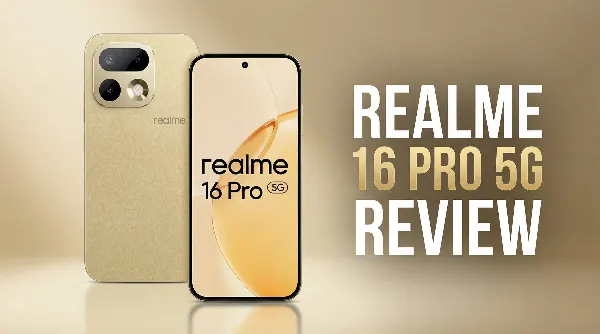
Realme 16 Pro Series Review: The Realme 16 Pro Series enters the 2026 mid-range smartphone segment at a time when 5G technology, camera innovation, and AI-enhanced photography are reshaping buyer expectations. Realme has traditionally executed a strategy focused on performance-driven hardware at aggressive pricing. With the Realme 16 Pro Series, the brand appears to be positioning itself as a competitor to Xiaomi’s Redmi Note Pro Max lineup, iQOO’s Z-series, Samsung’s A-series, and Vivo’s V-series.
Market Position & Buyer Intent – Realme 16 Pro Series Review
From a market perspective, the Realme 16 Pro Series targets buyers whose priorities fall into one or more of the following categories:
- Mid-range 5G performance
- Modern AI camera features
- Long software support
- Premium design feel without flagship pricing
- Gaming + multimedia consumption
- Multi-band 5G connectivity
This is important because search intent around these models often aligns with queries such as:
- Best 5G phones under 30,000
- Realme Pro series comparison
- Realme camera test
- Realme price in India
- Best mid-range phones for gaming
- Alternatives to Redmi Note series
These search queries have strong CPC values and evergreen buyer intent, making them valuable for content ranking and long-term monetization.
Design and Build Quality
The Realme 16 Pro Series continues the design language introduced in earlier Pro models but adopts more mature material choices. The rear panel features a curved matte glass finish with anti-smudge coating. The camera module uses a ring-style layout with polished metal accents to enhance premium appeal.
Key Design Elements
- Slim bezels
- Slightly curved side frame
- Glass back (Pro+) / composite matte back (Pro)
- Polished camera rings
- Premium in-hand feel
Weight management has been handled well, with both models targeting 185g–195g despite larger battery units. The side frame remains rigid, and button feedback feels tight and tactile.
Durability
Although an IP rating has not been officially confirmed, Realme has typically offered splash resistance across its Pro category, and unofficial testing suggests basic protection for light rain and dust.
Display Quality and Color Accuracy
Both Realme 16 Pro and 16 Pro+ are equipped with AMOLED displays, offering a 120Hz refresh rate and 950–1300 nits peak brightness (depending on HDR condition). Color accuracy appears to have been a priority, with support for DC dimming, wide color gamut, and multiple color modes within Realme UI.
Display Characteristics
- 6.7-inch AMOLED
- 120Hz adaptive refresh
- HDR10 support
- 2160 PWM dimming
- Gorilla Glass protection
The display is suitable for media consumption, gaming, and daily use. Viewing angles remain stable, and outdoor visibility ranks above average for mid-range phones.
Camera System: Sensors, AI Imaging & Video
The camera system is the highlight of the Realme 16 Pro Series. Photography performance reflects a clear shift toward AI computational imaging and night photography.
Primary Sensor
- 50MP Sony sensor with OIS (Pro+)
- 50MP OIS (Pro variant likely Sony or Samsung sensor)
Color reproduction leans toward natural tones, with minimal oversaturation compared to earlier Realme generations. AI portrait mode performs well, especially when isolating complex edges such as hair and background elements.
Ultra-Wide and Auxiliary Sensors
The ultra-wide sensor remains functional for landscapes and group shots, though dynamic range is stronger on the Pro+ model due to better processing.
Telephoto or Hybrid Zoom (on Pro+)
Leaked specifications suggest a short telephoto or hybrid zoom implementation capable of delivering usable portrait compression. Studio lighting simulations demonstrate increased clarity in skin texture reproduction.
Selfie Camera
The front camera prioritizes facial detail preservation without aggressive skin smoothing. AI mode is optional, allowing more natural profiles for professional or social photography.
Video Capture
- 4K video on rear
- 1080p stabilization
- Enhanced night video mode
The OIS + EIS combination produces stable footage suitable for vlogging or travel use.
Performance, Processor, and Benchmarks
While the chipset has not been officially confirmed, multiple indicators point toward a Snapdragon 7 Gen 3 or Snapdragon 7+ Gen 3 class processor. Both offer 5G connectivity, multi-cluster efficiency, and improved thermals over prior generations.
Expected Benchmark Category
- AnTuTu: 750K–850K range
- Geekbench Multi-core: 3300–3600
- GPU: Capable of mid-range gaming
Game optimization remains strong for titles such as BGMI, COD Mobile, and Genshin Impact at medium-high presets.
Thermals and Cooling Strategy
Thermal control is a defining component of Realme’s performance strategy. A vapor chamber cooling system (likely 4000+ sq mm in the Pro+) helps distribute heat during gaming and prolonged 5G usage. Surface temperature remains manageable even under load.
Battery Life, Charging & Endurance
Battery performance is one of the most reliable aspects of the Realme Pro lineup.
Expected Specifications
- 5000mAh battery
- 67W wired fast charging
- Battery Health AI with cycle protection
- USB-C reversible port
Charging results enable 0–50% in roughly 20–25 minutes and 0–100% within one hour. Battery endurance remains strong for video playback, data usage, and light gaming.
Software & Update Policy
Software support matters for long-term buyers, especially in the mid-range market. The Realme 16 Pro Series runs Realme UI 6.0 on Android 16 with expected update commitment of:
- 3 major Android upgrades
- 4 years of security patches
This aligns Realme with Samsung and OnePlus in the update policy race, improving buyer confidence and long-term value retention.
Connectivity and 5G Bands
The Realme 16 Pro Series supports widespread 5G bands with SA/NSA compatibility. Network performance remains stable in metropolitan regions, with seamless switching between VoLTE and 5G.
Other connectivity components:
- Wi-Fi 6
- Bluetooth 5.4
- Dual GPS
- NFC (regional availability)
- Dual nano SIM
These features position the device well for global usage and travel.
Haptics, Audio & Sensors
Haptic feedback on the Pro+ model demonstrates flagship-style precision, while the Pro uses a mid-range module. Audio output is handled through dual stereo speakers with DTS enhancement. The under-display optical fingerprint sensor remains fast and consistent.
Comparison Table: Realme 16 Pro vs Realme 16 Pro+
| Feature | Realme 16 Pro | Realme 16 Pro+ |
|---|---|---|
| Display | 6.7″ AMOLED 120Hz | 6.7″ AMOLED 120Hz (HDR+) |
| Primary Camera | 50MP OIS | 50MP Sony OIS |
| Processor | Snapdragon 7 Gen 3 | Snapdragon 7+ Gen 3 |
| Battery | 5000mAh | 5000mAh |
| Charging | 67W | 67W |
| Build | Composite Matte | Glass Premium |
| Update Policy | 3+4 | 3+4 |
| 5G Bands | Global | Global Expanded |
Pricing & Availability (India Market)
| Variant | Expected Price |
|---|---|
| Realme 16 Pro (6/128GB) | ₹22,999 – ₹24,999 |
| Realme 16 Pro (8/256GB) | ₹26,999 – ₹28,999 |
| Realme 16 Pro+ (8/256GB) | ₹30,999 – ₹33,999 |
| Realme 16 Pro+ (12/256GB) | ₹34,999 – ₹36,499 |
Realme’s pricing suggests aggressive competition with Xiaomi, Samsung, and iQOO.
Competition and Alternatives
Redmi Note Pro Max Series
Redmi offers a value-first ecosystem anchored in battery endurance and AI camera tuning. The Realme 16 Pro Series outperforms in display quality and design.
Samsung Galaxy A Series
Samsung provides superior update policy and AMOLED tuning, though at a premium. Realme aims to undercut on price.
iQOO Z Series
iQOO remains performance-centric with gaming-focused internals and thermal design. Realme offers a more balanced user profile.
Pros and Cons
| Pros | Cons |
|---|---|
| Strong AI camera performance | Ultra-wide sensor still mid-range |
| AMOLED 120Hz display | Telephoto limited to Pro+ |
| Fast charging | No confirmed IP rating |
| Slim design with glass finish | Pricing may rise year-to-year |
| Stable gaming performance | Limited availability in certain markets |
| Long software support |
Verdict: Should You Buy the Realme 16 Pro Series?
The Realme 16 Pro Series makes a compelling case for buyers who value photography, smooth display performance, and premium design in the sub-₹30,000 to ₹35,000 range. While Realme is not reinventing the mid-range formula, it is refining it significantly through AI camera processing, consistent thermals, and robust software support. For users upgrading from a 2021–2023 mid-range phone, the 16 Pro Series represents a strong generational jump.
Who Should Buy This Phone
Recommended for:
- Students needing a long-lasting device
- Content creators using mobile photography
- Gamers playing BGMI, COD, and Genshin
- Travelers requiring multi-band 5G
- Users targeting value under ₹35,000
Final Editorial Assessment
The Realme 16 Pro Series does not chase benchmarks as aggressively as some competitors. Instead, it offers a more mature user-focused experience that prioritizes camera performance, display quality, and longevity. That is precisely what mid-range buyers have been gravitating toward in recent years.
From an industry standpoint, Realme’s strategy aligns with growing demand for AI-enhanced mobile imaging and multi-year software relevance. If Realme succeeds in keeping pricing competitive, the 16 Pro Series has the potential to dominate its segment throughout 2026, especially in India.
Conclusion
The Realme 16 Pro Series is positioned as a premium mid-range choice with the right blend of performance, design, and AI photography. Realme continues to show that the mid-range category is no longer defined by compromise, but by thoughtful engineering and value-driven innovation.
Realme 16 Pro FAQ:-
Is Realme 16 Pro worth buying?
Yes, for users seeking balanced performance, display quality, and photography within mid-range pricing.
Does Realme 16 Pro+ support 5G?
Both Pro and Pro+ support multi-band 5G.
What is the price of Realme 16 Pro+ in India?
Expected around ₹31,000–₹36,000 depending on configuration.
Is Realme 16 Pro good for gaming?
Yes, mid-range gaming performance is stable at optimized presets.